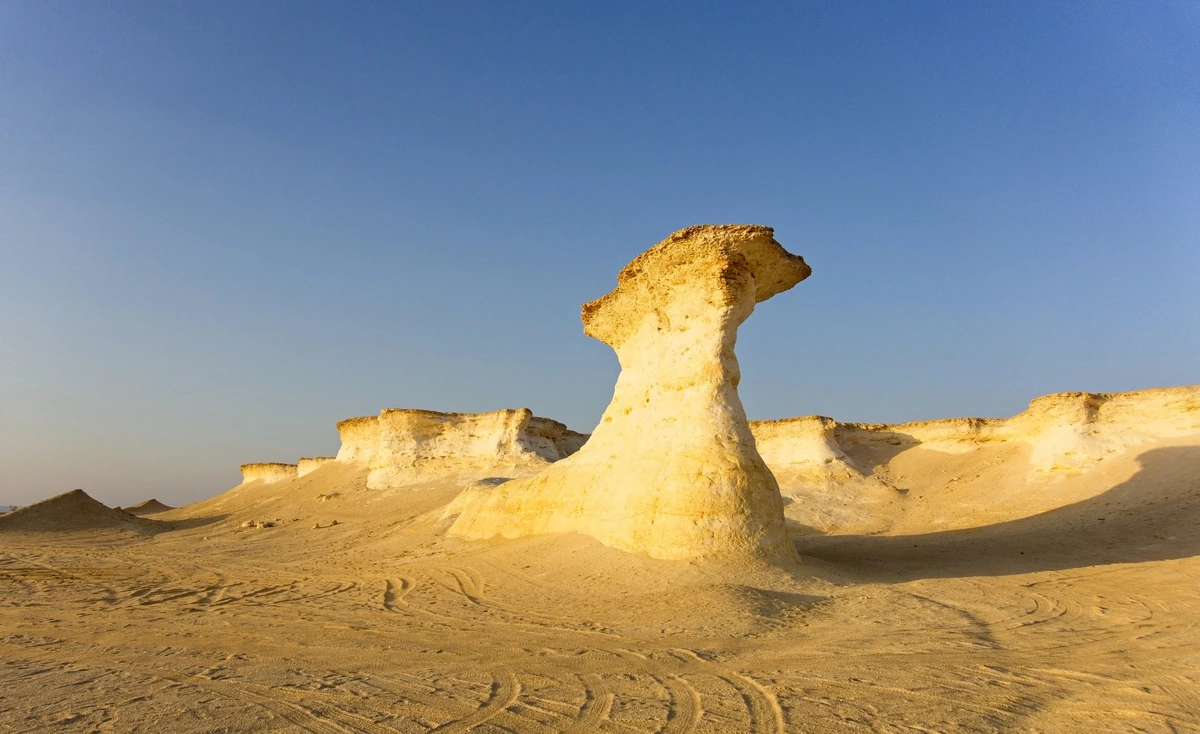
West Qatar is the quieter, wilder side of the country. Around 80–90 km from Doha, near the village of Zekreet on the road to Dukhan, wind-carved limestone hills rise from the desert and four towering steel plates by the sculptor Richard Serra stand in a line across the Brouq Nature Reserve. This guide covers what to see, how to get there and how to plan your day, whether you drive yourself or join our West Qatar tour.
Where is West Qatar, and how far is it from Doha?
When visitors talk about West Qatar, they usually mean the Ras Brouq peninsula (also spelled Ras Abrouq) and its surroundings, close to Zekreet and the oil town of Dukhan. Visit Qatar puts the area at roughly 80–90 km from Doha: follow the Dukhan road west for about 80 km, then turn off at the Zekreet junction.
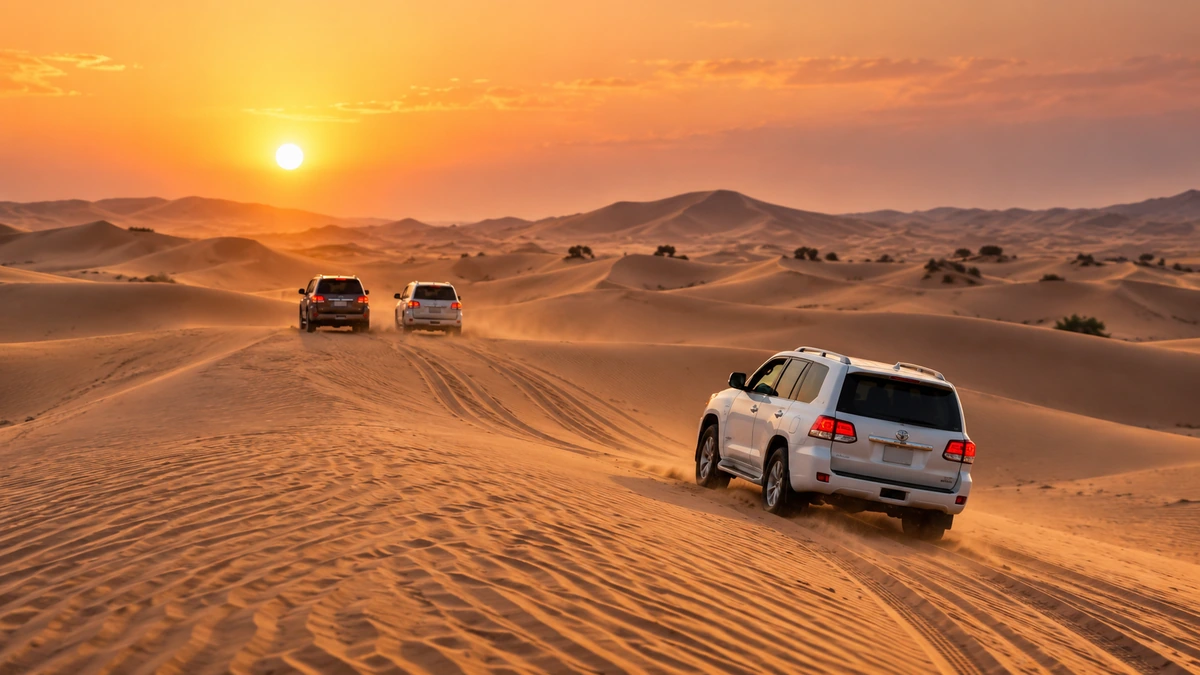
The last stretch is on desert tracks. Visit Qatar notes that a standard car can manage it, but a 4×4 is more comfortable. Once you leave the main road there are no shops, cafés or toilets, so plan your water, fuel and timing before you set off.
Ras Brouq: Qatar’s mushroom rocks
Ras Brouq looks nothing like the rolling dunes of southern Qatar. Wind has slowly worn away soft layers of limestone here, leaving pale cliffs, pillars and mushroom-shaped hills perched on narrower stems. Qatar Museums lists Ras Brouq’s white cliffs among the country’s heritage sites.
People have passed through this landscape since prehistoric times. Archaeologists have found flint tools once used for hunting, yet the peninsula never had permanent settlements; semi-nomadic tribes used it instead. Much of the area now lies within the Brouq Nature Reserve, and Visit Qatar mentions oryx and migratory birds among its wildlife.
Because the limestone is soft, enjoy the formations from the ground rather than climbing on them. Early morning and late afternoon light brings out their shapes best for photographs.
Richard Serra’s East–West / West–East
In 2014, Qatar Museums unveiled East–West / West–East, a commission by the American sculptor Richard Serra, in the Brouq Nature Reserve. Four steel plates run in a line for more than a kilometre across the desert. Every plate is over 14 metres tall: the two outer plates reach about 16.7 metres and the two inner plates about 14.7 metres.
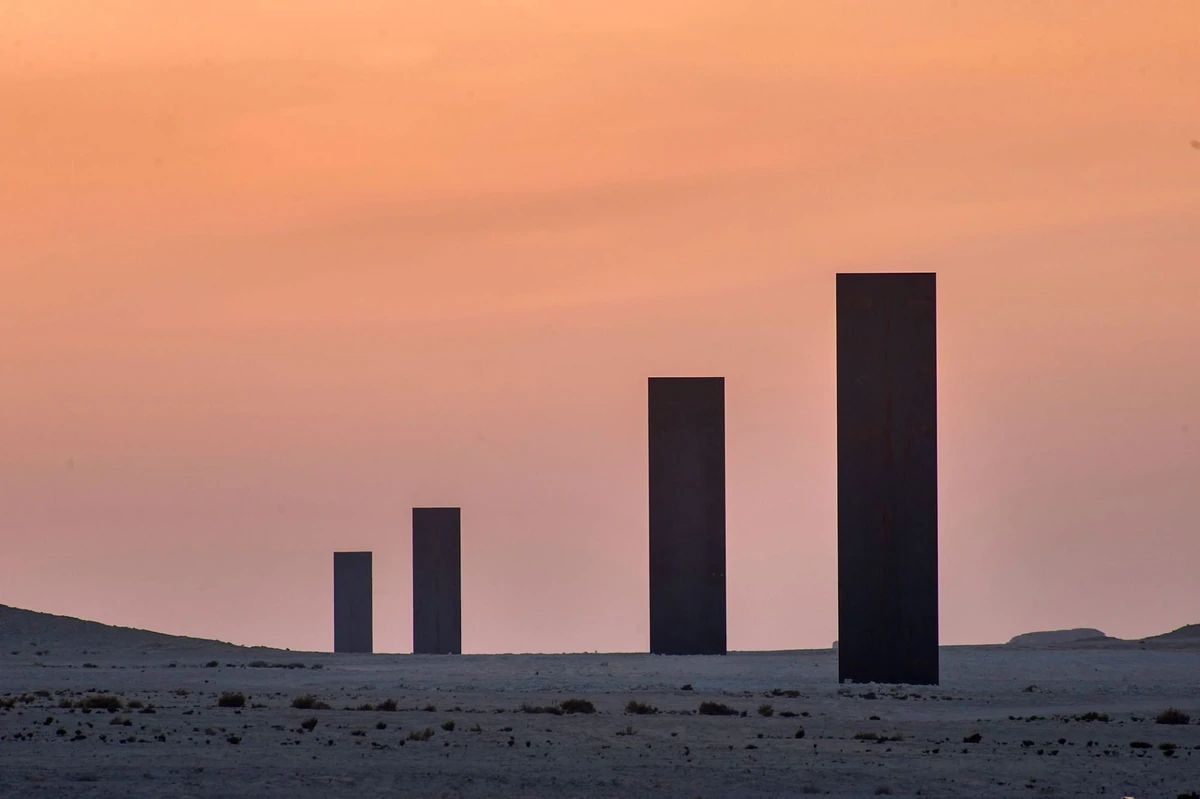
Serra studied the topography of the site before placing them, so the plates align precisely along the route even as the ground rises and falls. Standing at the foot of one, then looking down the line to the next, is the best way to understand the scale of the work and the emptiness around it.
Zekreet: fort, mosque and village heritage
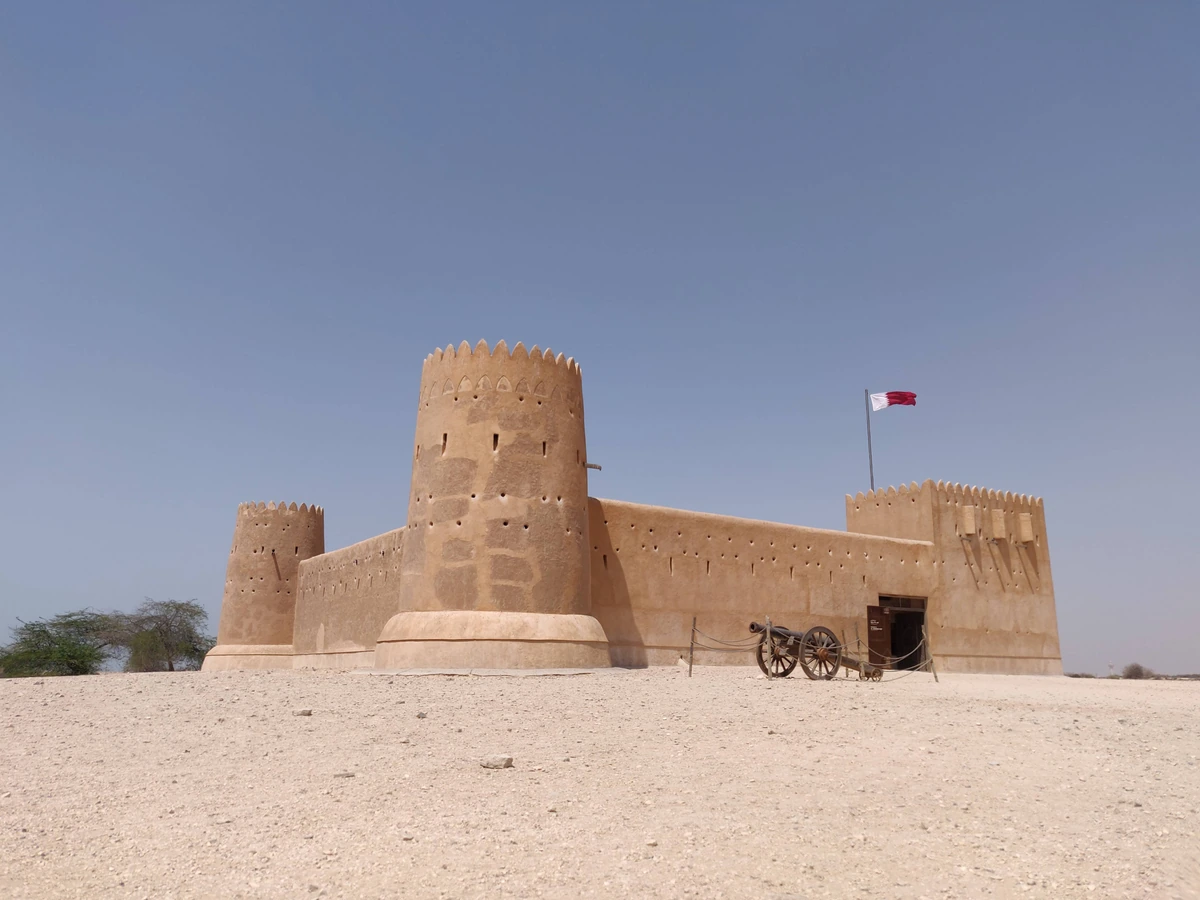
Zekreet is a small village near Dukhan with a long history. Its fort is believed to date from between 1809 and 1812 and was built by the tribal leader Rahma bin Jaber Al Jalahmah from faroush, the local beach rock. Qatar Museums describes it as the only fort in Qatar’s western region. Its corner towers were added later, and the remains of date presses, known as madabis, were found between the fort and the sea.
Zekreet’s mosque dates to the early 20th century. It has a courtyard and a cylindrical minaret on each of its northern and southern walls. Our West Qatar route passes through the village, where the old mosque and the Imam House are heritage stops on the original itinerary.
When we checked in November 2026, Qatar Museums listed Zekreet Fort and Mosque as temporarily closed until further notice. Access can change, so confirm what is open before you plan a visit inside.
When to go
West Qatar is an outdoor trip with very little shade. The cooler months, roughly November to March, are the most comfortable for walking around the rocks and the sculpture. At other times of year, go early in the morning or late in the afternoon and keep your time in the open short. Late light also suits photographs of the steel plates.
What to bring and how to behave
- Plenty of water, sun protection, sunglasses and a hat.
- Comfortable closed shoes for rocky, uneven ground.
- A camera, and a light layer for winter mornings and evenings.
- A bag for your rubbish, so you can take everything back with you.
Keep to existing tracks, leave the rock formations and the artwork as you found them, and do not photograph military installations or government buildings.
Visiting West Qatar with Adventure Time Tourism
Our West Qatar tour takes around three to four hours from Doha. Your guide meets you at your hotel, the airport or another agreed location in Doha, and you travel in an air-conditioned 4×4 to Ras Brouq, Zekreet and East–West / West–East. Water, soft drinks, tea or coffee are included, and prices for groups of one to six people are listed on the tour page.
If heritage is your interest, pair it with our North of Qatar tour to Al Khor and Al Zubarah. For dunes and the Inland Sea, compare our desert safaris. Share your dates and group size through our trip planner, and our team will confirm the details for your visit.
Sources: Qatar Museums on East–West / West–East, Ras Brouq’s white cliffs and Zekreet Fort and Mosque; Visit Qatar on Zekreet Beach and Ras Abrouq; Architectural Record and David Zwirner on the sculpture. Checked 20 November 2026.
This story is from our travel journal. Tour arrangements and attraction access can change; our team can confirm current details for your visit.